Thursday, October 4, 2012

Masjidoun Ka Aashiq


ایک شخص نے یوں قصہ سنایا کہ میں اور میرے ماموں نے حسب معمول مکہ حرم شریف میں نماز جمعہ ادا کی اورگھر کو واپسی کیلئے روانہ ہوئے۔ شہر سے باہر نکل کر سڑک کے کنارے کچھ فاصلے پر ایک بے آباد سنسان مسجد آتی ہے، مکہ شریف کو آتے جاتے سپر ہائی وے سے بارہا گزرتے ہوئے اس جگہ اور اس مسجد پر ہماری نظر پڑتی رہتی ہے اور ہم ہمیشہ ادھر سے ہی گزر کر جاتے ہیں مگر آج جس چیز نے میری توجہ اپنی طرف کھینچ لی تھی وہ تھی ای

ک نیلے رنگ کی فورڈ کار جو مسجد کی خستہ حال دیوار کے ساتھ کھڑی تھی، چند لمحے تو میں سوچتا رہا کہ اس کار کا اس سنسان مسجد کے پاس کیا کام! مگر اگلے لمحے میں نے کچھ جاننے کا فیصلہ کرتے ہوئے اپنی کار کو رفتار کم کرتے ہوئے مسجد کی طرف جاتی کچی سائڈ روڈ پر ڈال دیا، میرا ماموں جو عام طور پر واپسی کا سفر غنودگی میں گزارتا ہے اس نے بھی اپنی اپنی آنکھوں کو وا کرتے ہوئے میری طرف حیرت سے دیکھتے ہوئے پوچھتا، کیا بات ہے، ادھر کیوں جا رہے ہو؟


ہم نے اپنی کار کو مسجد سے دور کچھ فاصلے پر روکا اور پیدل مسجد کی طرف چلے، مسجد کے نزدیک جانے پر اندر سے کسی کی پرسوز آواز میں سورۃ الرحمٰن تلاوت کرنے کی آواز آ رہی تھی، پہلے تو یہی اردہ کیا کہ باہر رہ کر ہی اس خوبصورت تلاوت کو سنیں ، مگر پھر یہ سوچ کر کہ اس بوسیدہ مسجد میں جہاں اب پرندے بھی شاید نہ آتے ہوں، اند جا کر دیکھنا تو چاہیئے کہ کیا ہو رہا ہے؟


ہم نے اند جا کر دیکھا ایک نوجوان مسجد میں جاء نماز بچھائے ہاتھ میں چھوٹا سا قرآن شریف لئے بیٹھا تلاوت میں مصروف ہے اور مسجد میں اس کے سوا اور کوئی نہیں ہے۔ بلکہ ہم نے تو احتیاطا ادھر ادھر دیکھ کر اچھی طرح تسلی کر لی کہ واقعی کوئی اور موجود تو نہیں ہے۔


میں نے اُسے السلام و علیکم و رحمۃ اللہ و برکاتہ کہا، اس نے نطر اُٹھا کر ہمیں دیکھا، صاف لگ رہا تھا کہ کسی کی غیر متوقع آمد اس کے وہم و گمان میں بھی نہ تھی، حیرت اس کے چہرے سے عیاں تھی۔


اُس نے ہمیں جوابا وعلیکم السلام و علیکم و رحمۃ اللہ و برکاتہ کہا۔


میں نے اس سے پوچھا، عصر کی نماز پڑھ لی ہے کیا تم نے، نماز کا وقت ہو گیا ہے اور ہم نماز پڑھنا چاہتے ہیں۔


اُس کے جواب کا انتظار کئے بغیر میں نے اذان دینا شروع کی تو وہ نوجوان قبلہ کی طرف رخ کئے مسکرا رہا تھا، کس بات پر یا کس لئے یہ مسکراہٹ، مجھے پتہ نہیں تھا۔ عجیب معمہ سا تھا۔


پھر اچانک ہی اس نوجوان نے ایک ایسا جملہ بولا کہ مجھے اپنے اعصاب جواب دیتے نظر آئے،


نوجوان کسی کو کہہ رہا تھا؛ مبارک ہو، آج تو باجماعت نماز ہوگی۔


میرے ماموں نے بھی مجھے تعجب بھری نظروں سے دیکھا جسے میں نظر انداز کر تے ہوئے اقامت کہنا شروع کردی۔


جبکہ میرا دماغ اس نوجوان کے اس فقرے پر اٹکا ہوا تھا کہ مبارک ہو، آج تو باجماعت نماز ہوگی۔


دماغ میں بار بار یہی سوال آ رہا تھا کہ یہ نوجوان آخر کس سے باتیں کرتا ہے، مسجد میں ہمارے سوا کوئی بندہ و بشر نہیں ہے، مسجد فارغ اور ویران پڑی ہے۔ کیا یہ پاگل تو نہیں ہے؟


میں نے نماز پڑھا کر نوجوان کو دیکھا جو ابھی تک تسبیح میں مشغول تھا۔


میں نے اس سے پوچھا، بھائی کیا حال ہے تمہارا؟ جسکا جواب اس نے ــ’بخیر و للہ الحمد‘ کہہ کر دیا۔


میں نے اس سے پھر کہا، اللہ تیری مغفرت کرے، تو نے میری نماز سے توجہ کھینچ لی ہے۔ ’وہ کیسے‘ نوجوان نے حیرت سے پوچھا۔


میں نے جواب دیا کہ جب میں اقامت کہہ رہا تھا تو نے ایک بات کہی مبارک ہو، آج تو باجماعت نماز ہوگی۔


نوجوان نے ہنستے ہوئے جواب دیا کہ اس میں ایسی حیرت والی کونسی بات ہے؟


میں نے کہا، ٹھیک ہے کہ اس میں حیرت والی کوئی بات نہیں ہے مگر تم بات کس سے کر رہے تھے آخر؟


نوجوان میری بات سن کر مسکرا تو ضرور دیا مگر جواب دینے کی بجائے اس نے اپنی نظریں جھکا کر زمین میں گاڑ لیں، گویا سوچ رہا ہو کہ میری بات کا جواب دے یا نہ دے۔


میں نے اپنی بات کو جاری رکھتے ہوئے کہا کہ مجھے نہیں لگتا کہ تم پاگل ہو، تمہاری شکل بہت مطمئن اور پر سکون ہے، اور ماشاءاللہ تم نے ہمارے ساتھ نماز بھی ادا کی ہے۔


اس بار اُس نے نظریں اُٹھا کر مجھے دیکھا اور کہا؛ میں مسجد سے بات کر رہا تھا۔


اس کی بات میرے ذہن پر بم کی کی طرح لگی، اب تو میں سنجیدگی سے سوچنے لگا کہ یہ شخص ضرور پاگل ہے۔


میں نے ایک بار پھر اس سے پوچھا، کیا کہا ہے تم نے؟ تم اس مسجد سے گفتگو کر رہے تھے؟ تو پھر کیا اس مسجد نے تمہیں کوئی جواب دیا ہے؟


اُس نے پھرمسکراتے ہوئے ہی جواب دیا کہ مجھے ڈر ہے تم کہیں مجھے پاگل نہ سمجھنا شروع کر دو۔


میں نے کہا، مجھے تو ایسا ہی لگ رہا ہے، یہ فقط پتھر ہیں، اور پتھر نہیں بولا کرتے۔


اُس نے مسکراتے ہوئے کہا کہ آپکی بات ٹھیک ہے یہ صرف پتھر ہیں۔


اگر تم یہ جانتے ہو کہ یہ صرف پتھر ہیں جو نہ سنتے ہیں اور نہ بولتے ہیں تو باتیں کس سے کیں؟


نوجوان نے نظریں پھر زمیں کی طرف کر لیں، جیسے سوچ رہا ہو کہ جواب دے یا نہ دے۔


اور اب کی بار اُس نے نظریں اُٹھائے بغیر ہی کہا کہ ؛


میں مسجدوں سے عشق کرنے والا انسان ہوں، جب بھی کوئی پرانی، ٹوٹی پھوٹی یا ویران مسجد دیکھتا ہوں تو اس کے بارے میں سوچتا ہوں


مجھے اُنایام خیال آجاتا ہے جب لوگ اس مسجد میں نمازیں پڑھا کرتے ہونگے۔


پھر میں اپنے آپ سے ہی سوال کرتا ہوں کہ اب یہ مسجد کتنا شوق رکھتی ہوگی کہ کوئی تو ہو جو اس میں آکر نماز پڑھے، کوئی تو ہو جو اس میں بیٹھ کر اللہ کا ذکر کرے۔ میں مسجد کی اس تنہائی کے درد کو محسوس کرتا ہوں کہ کوئی تو ہو جو ادھر آ کر تسبیح و تحلیل کرے، کوئی تو ہو جو آ کر چند آیات پڑھ کر ہی اس کی دیواروں کو ہلا دے۔


میں تصور کر سکتا ہوں کہ یہ مسجد کس قدر اپنے آپ کو باقی مساجد میں تنہا پاتی ہوگی۔


کس قدر تمنا رکھتی ہوگی کہ کوئی آکر چند رکعتیں اور چند سجدے ہی اداکر جائے اس میں۔


کوئی بھولا بھٹکا مسافر، یا راہ چلتا انسان آ کر ایک اذان ہی بلند کرد ے۔


پھر میں خود ہی ایسی مسجد کو جواب دیا کرتا ہوں کہ اللہ کی قسم، میں ہوں جو تیرا شوق پورا کرونگا۔


اللہ کی قسم میں ہوں جو تیرے آباد دنوں جیسے ماحول کو زندہ کرونگا۔


پھر میں ایسی مسجدمیں داخل ہو کر دو رکعت پڑھتا ہوں اور قرآن شریف کے ایک سیپارہ کی تلاوت کرتا ہوں۔


میرے بھائی، تجھے میری باتیں عجیب لگیں گی، مگر اللہ کی قسم میں مسجدوں سے پیار کرتا ہوں، میں مسجدوں کا عاشق ہوں۔


میری آنکھوں آنسوؤں سے بھر گئیں، اس بار میں نے اپنی نظریں زمیں میں ٹکا دیں کہ کہیں نوجوان مجھے روتا ہوا نہ دیکھ لے،


اُس کی باتیں۔۔۔۔۔ اُس کا احساس۔۔۔۔۔اُسکا عجیب کام۔۔۔۔۔اور اسکا عجیب اسلوب۔۔۔۔۔کیا عجیب شخص ہے جسکا دل مسجدوں میں اٹکا رہتا ہے۔۔۔۔۔


میرے پاس کہنے کیلئے اب کچھ بھی تو نہیں تھا۔


صرف اتنا کہتے ہوئے کہ، اللہ تجھے جزائے خیر دے، میں نے اسے سلام کیا، مجھے اپنی دعاؤں میں یاد رکھنا کہتے ہوئے اُٹھ کھڑا ہوا۔


مگر ایک حیرت ابھی بھی باقی تھی۔


نوجوان نے پیچھے سے مجھے آواز دیتے ہوئے کہا تو میں دروازے سے باہر جاتے جاتے رُک گیا،


نوجوان کی نگاہیں ابھی بھی جُھکی تھیں اور وہ مجھے کہہ رہا تھا کہ جانتے ہو جب میں ایسی ویران مساجد میں نماز پڑھ لیتا ہوں تو کیا دعا مانگا کرتا ہوں؟


میں نے صرف اسے دیکھا تاکہ بات مکمل کرے۔


اس نے اپنی بات کا سلسلہ جاری رکھتے ہوئے کہا میں دعا مانگا کرتا ہوں کہ


’ اے میرے پروردگار، اے میرے رب! اگر تو سمجھتا ہے کہ میں نے تیرے ذکر ، تیرے قرآن کی تلاوت اور تیری بندگی سے اس مسجد کی وحشت و ویرانگی کو دور کیا ہے تو اس کے بدلے میں تو میرے باپ کی قبر کی وحشت و ویرانگی کو دور فرما دے، کیونکہ تو ہی رحم و کرم کرنے والا ہے‘


مجھے اپنے جسم میں ایک سنسناہٹ سی محسوس ہوئی، اپنے آپ پر قابو نہ رکھ سکا اور پھوٹ پھوٹ کر رو دیا۔


پیارے دوست، پیاری بہن


کیا عجیب تھا یہ نوجوان، اور کیسی عجیب محبت تھی اسے والدین سے!


کسطرح کی تربیت پائی تھی اس نے؟


اور ہم کس طرح کی تربیت دے رہے ہیں اپنی اولاد کو؟


ہم کتنے نا فرض شناس ہیں اپنے والدین کے چاہے وہ زندہ ہوں یا فوت شدہ؟


بس اللہ سے دعا ہے کہ وہ ہمیں نیک اعمال کی توفیق دے اور ہمارا نیکی پر خاتمہ کرے، اللھم آمین


ازراہ کرم! اگر آپ کو اس ایمیل کا موضوع اچھا لگا ہے تو اپنے ان احباب کو بھیج دیجیئے جن کا آپ چاہتے ہیں بھلا اور فائدہ ہو جائے۔


مت بھولئے کہ نیکی کی ترغیب دلانے والے کو نیکی کرنے والے جتنا ثواب ملتا ہے۔


کیا کبھی آپ میں سے کسی نے یہ سوچا ہے کہ موت کے بعد کیا ہوگا؟ جی ہاں موت کے بعد کیا ہوگا؟


تنگ و تاریک گڑھا، گھٹا ٹوپ اندھیرا، وحشت و ویرانگی، سوال و جواب، سزا و جزا، اور پھر جنت یا

Our beloved Prophet (PBUH)

In the Name of Allah, the Most Beneficent, the Most Merciful.

 Our beloved Prophet (PBUH)


Our beloved Prophet (PBUH), the last messenger of God, was the best of the mankind sent as a blessing for this world and world hereafter. Hence what ever is there in the holy book of Quran are his manners, dispositions, ethics and morality.
If you turn the pages of history you shall find no equal The Prophet Mohammad (PBUH) was a candle of knowledge and wisdom. His every message was a message of peace. In his (PBUH) every say and instruction there was a philosophy of life and discipline. In nut shell in his message there was a gain for this life and life hereafter.
That great man who was even worried for his Ummah for the Day of Judgment asks mercy from Allah for his followers.
Is not this a matter of concern that the same Ummah has forgotten his message? His instructions and sayings are like a candle in the path of darkness. Today to follow his instructions apart, Muslims do not even consider it necessary to think over them for a while. Though his instructions and sayings are the golden rule which ensures a successful life in this world and life here after. If we adopt those rules we can become successful human beings. Alas, we have gone too far off from our Allah, religion and Prophet (PBUH), and same has caused our down fall. We are blindly running after the materialistic world and have involved ourselves into sins that people of other religion have started ridiculing the Muslims. We are considered as the wicked nation of the world and the Islam which is a religion of peace and tranquility is termed as the religion of terrorists and wicked.

Non Muslims Views About Our Beloved Muhammad (PBUH)


European and Western views

According to Hossein Nasr, earliest European literature often refers to Muhammad unfavorably. A few learned circles of Middle AgesEurope—primarily Latin-literate scholars—had access to fairly extensive biographical material about Muhammad. They interpreted that information through a Christian religious filter that viewed Muhammad as a charlatan driven by ambition and eagerness for power, and who seduced the Saracens into his submission under a religious guise.[15] Popular European literature of the time portrayed Muhammad as though he were worshipped by Muslims in the manner of an idol or a heathen god.[15] Some medieval Christians believed he died in 666, alluding to the number of the beast, instead of his actual death date in 632;[266] others changed his name from Muhammad to Mahound, the "devil incarnate".[267] Bernard Lewis writes "The development of the concept of Mahound started with considering Muhammad as a kind of demon or false god worshipped with Apollyon and Termagant in an unholy trinity."[268] A later medieval work, Livre dou Tresor represents Muhammad as a former monk and cardinal.[15] Dante's Divine Comedy (Canto XXVIII), puts Muhammad, together with Ali, in Hell "among the sowers of discord and the schismatics, being lacerated by devils again and again."[15]Cultural critic and author Edward Said wrote in Orientalism regarding Dante's depiction of Muhammad:
Empirical data about the Orient...count for very little; ... What ... Dante tried to do in the Inferno, is ... to characterize the Orient as alien and to incorporate it schematically on a theatrical stage whose audience, manager, and actors are ... only for Europe. Hence the vacillation between the familiar and the alien; Mohammed is always the imposter (familiar, because he pretends to be like the Jesus we know) and always the Oriental (alien, because although he is in some ways "like" Jesus, he is after all not like him).[269]
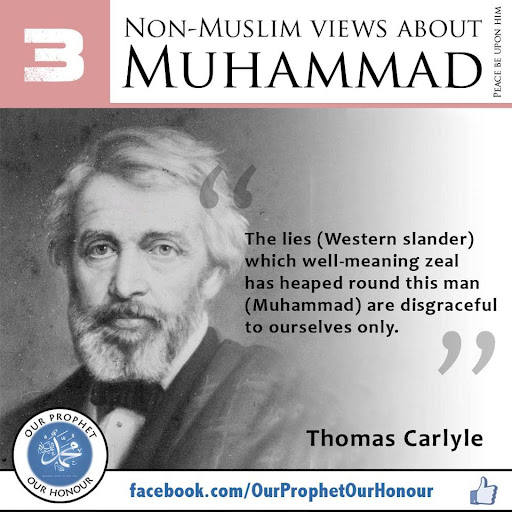
After the Reformation, Muhammad was often portrayed as a cunning and ambitious impostor.[15][268] Guillaume Postel was among the first to present a more positive view of Muhammad.[15] Boulainvilliers described Muhammad as a gifted political leader and a just lawmaker.[15] Gottfried Leibniz praised Muhammad because "he did not deviate from the natural religion".[15] Thomas Carlyle in his bookHeroes and Hero Worship and the Heroic in History (1840) describes Muhammed as "[a] silent great soul; [...] one of those who cannotbut be in earnest".[270] Edward Gibbon in his book The History of the Decline and Fall of the Roman Empire observes that "the good sense of Mohammad despised the pomp of royalty." Friedrich Martin von Bodenstedt (1851) described Muhammad as "an ominous destroyer and a prophet of murder."[15]
Simon Ockley wrote in his book The History of the Saracen Empires (1718);
The greatest success of Mohammad’s life was effected by sheer moral force...It is not the propagation but the permanency of his religion that deserves our wonder, the same pure and perfect impression which he engraved at Mecca and Medina is preserved, after the revolutions of twelve centuries by the Indian, the African and the Turkish proselytes of the Koran. . . The Mahometans have uniformly withstood the temptation of reducing the object of their faith and devotion to a level with the senses and imagination of man. 'I believe in One God and Mahomet the Apostle of God' is the simple and invariable profession of Islam. The intellectual image of the Deity has never been degraded by any visible idol; the honours of the prophet have never transgressed the measure of human virtue, and his living precepts have restrained the gratitude of his disciples within the bounds of reason and religion.[271]

A 19th century depiction titled"Muhammad preaching" (1840–1850) by Russian artist Grigory Gagarin
Reverend Benjamin Bosworth Smith in his book Muhammad and Muhammadanism (1874) commented that;
...if ever any man had the right to say that he ruled by the right divine, it was Mohammed, for he had all the power without its instruments and without its supports. He cared not for the dressings of power. The simplicity of his private life was in keeping with his public life...In Mohammadanism every thing is different here. Instead of the shadowy and the mysterious, we have history....We know of the external history of Muhammad....while for his internal history after his mission had been proclaimed, we have a book absolutely unique in its origin, in its preservation....on the Substantial authority of which no one has ever been able to cast a serious doubt.[272]
Alphonse de Lamartine's Histoire de la Turquie (1854) says about Muhammad:
If greatness of purpose, smallness of means and outstanding results are the three criteria of human genius, who could dare compare any great man in modern history with Muhammad.[273]
Never has a man proposed for himself, voluntarily or involuntarily, a goal more sublime, since this goal was beyond measure: undermine the superstitions placed between the creature and the Creator, give back God to man and man to God, reinstate the rational and saintly idea of divinity in the midst of this prevailing chaos of material and disfigured gods of idolatry.... The most famous have only moved weapons, laws, empires; they founded, when they founded anything, only material powers, often crumbling before them. This one not only moved armies, legislations, empires, peoples, dynasties, millions of men over a third of the inhabited globe; but he also moved ideas, beliefs, souls. He founded upon a book, of which each letter has become a law, a spiritual nationality embracing people of all languages and races; and made an indelible imprint upon this Muslim world, for the hatred of false gods and the passion for the God, One and Immaterial. ... Philosopher, orator, apostle, legislator, warrior, conqueror of ideas, restorer of a rational dogma for a cult without imagery, founder of twenty earthly empires and of a spiritual empire, this is Muhammad.[273]
Annie Besant in The Life and Teachings of Muhammad (1932) wrote
It is impossible for anyone who studies the life and character of the great Prophet of Arabia, who knows how he taught and how he lived, to feel anything but reverence for that mighty Prophet, one of the great messengers of the Supreme...[274]
According to William Montgomery Watt and Richard Bell, recent writers have generally dismissed the idea that Muhammad deliberately deceived his followers, arguing that Muhammad "was absolutely sincere and acted in complete good faith"[275] and that Muhammad’s readiness to endure hardship for his cause when there seemed to be no rational basis for hope shows his sincerity.[276] Watt says that sincerity does not directly imply correctness: In contemporary terms, Muhammad might have mistaken his own subconscious for divine revelation.[277] Watt and Bernard Lewis argue that viewing Muhammad as a self-seeking impostor makes it impossible to understand the development of Islam.[278][279] Alford T. Welch holds that Muhammad was able to be so influential and successful because of his firm belief in his vocation.[15] Michael H. Hart in his first book The 100: A Ranking of the Most Influential Persons in History (1978), a ranking of the 100 people who most influenced human history,[280] chose Muhammad as the first person on his list,[281] attributing this to the fact that Muhammad was "supremely successful" in both the religious and secular realms. He also credits the authorship of theQuran to Muhammad, making his role in the development of Islam an unparalleled combination of secular and religious influence which entitles Muhammad to be considered the most influential single figure in human history.

غیر مسلم مشاہیر کے خیالات

مغربی مصنف مائیکل ہارٹ نے اپنی مشہورِ زمانہ کتاب The Hundred میں دنیا کے ان سو عظیم ترین آدمیوں کا ذکر کیا ہے جنہوں نے دنیا کی تشکیل میں بڑا کردار ادا کیا۔ اس نے حضور صلی اللہ علیہ و آلہ وسلم کو سب سے پہلے شمار پر رکھا ہے۔ مصنف ایک عیسائی ہوکر بھی اپنے دلائل سے یہ ثابت کرتاہے کہ حضرت محمد صلی اللہ علیہ و آلہ وسلم پورے نسل انسانی میں سیّدالبشرکہنے کے لائق ہیں۔[22] تھامس کارلائیل نے 1840ء کے مشہور دروس (لیکچرز) میں کہا کہ ”میں محمد سے محبت کرتاہوں اور یقین رکھتا ہوں کہ ان کی طبیعت میں نام ونمود اور ریا کا شائبہ تک نہ تھا ۔ ہم انہی صفات کے بدلے میں آپ کی خدمت میں ہدیہً اخلاص پیش کرتے ہیں “۔ فرانس کا شہنشاہ نپولین بوناپارٹ کہتاہے ” محمد دراصل سروراعظم تھے ۔15سال کے قلیل عرصے میں لوگوں کی کثیر تعداد نے جھوٹے دیوتاﺅں کی پرستش سے توبہ کرڈالی۔ مٹی کی بنی دیویاں مٹی میں ملا دی گئیں ۔ یہ حیرت انگیز کارنامہ تھا آنحضرت کی تعلیم کا “۔ جارج برناڈشا لکھتا ہے ” موجودہ انسانی مصائب سے نجات ملنے کی واحد صورت یہی ہے کہ محمد اس دنیا کے رہنما بنیں “۔ گاندھی لکھتا ہے کہ ” بانی اسلام نے اعلیٰ اخلاق کی تعلیم دی جس نے انسان کو سچائی کا راستہ دکھایا اور برابری کی تعلیم دی ۔ میں اسلام کا جتنا مطالعہ کرتاہوں اتنا مجھے یقین راسخ ہوجاتاہے کہ یہ مذہب تلوار سے نہیں پھیلا “۔ جرمنی کا مشہور ادیب شاعر اور ڈرامہ نگار ”گوئٹے “ حضور کا مداح اور عاشق تھا ۔اپنی تخلیق ”دیوانِ مغربی“میں گوئٹے نے حضور اقدس کی بارگاہ میں جگہ جگہ عشق محمد کا اظہار کیا ہے اور ان کے قدموں میں عقیدت کے پھول نچھاور کئے ہیں ۔ فرانس کے محقق ڈی لمرٹائن نے اپنی کتاب ”تاریخِ ترکی“ میں انسانی عظمت کے لئے جو معیار قائم کیا اس ضمن میں فاضل تاریخ دان لکھتاہے ” اگر انسانی عظمت کو ناپنے کے لئے تین شرائط اہم ہیں جن میں (۱) ۔ مقصد کی بلندی ، (۲) ۔ وسائل کی کمی، (۳)۔حیرت انگیر نتائج ۔ تو اس معیار پر جدید تاریخ کی کو ن سی شخصیت محمد سے ہمسری کا دعویٰ کرسکتی ہے “۔ فرانسیسی مصنف دی لمرتین لکھتاہے ” فلسفی ، مبلغ ، پیغمبر ، قانون سا ز ، سپاہ سالار، ذہنو ں کا فاتح ، دانائی کے عقائد برپا کرنے والا ، بت پرستی سے پاک معاشرہ تشکیل دینے والا ۔ بیسیوں ریاستوں کو ایک روحانی سلطنت میں متحد کرنے والا....وہ محمد ہیں ....جہاں تک انسانی عظمت کے معیار کا تعلق ہے ہم پوچھ سکتے ہیں کہ ان معیاروں پر پورا اُترنے والا محمد سے بھی کوئی برتر ہوسکتا ہے “۔؟ ڈاکٹر شیلے پیغمبر آخرالزماں کی ابدیت اور لاثانیت کا اقرار کرتے ہوئے لکھتے ہیں ” محمد گزشتہ اور موجودہ لوگوں میں سب سے اکمل اور افضل تھے اور آئندہ ان کا مثال پیدا ہونا محال اور قطعاً غیر ممکن ہے“۔ [23]

Focus on Faith: Perfecting good manners

By Imran Tufail 
October 04, 2012

Imran Tufail is a member of Berkshire Islamic Information Group and a speaker on Islam
When Ernst Zundel was sentenced to five years imprisonment in 2005, the crime was denying the Holocaust.
The declaration of human rights article 19 states: “Everyone has the right to freedom of opinion and expression.”
The recent video blaspheming Islam and Prophet Muhammad, peace and blessings of God be upon him (pbuh), re-produced by Nakoula Basseley was a form of abusing freedom of speech.
Prophet Muhammad (pbuh) is the exemplary role model for 1.5 billion Muslims, who attempt to emulate his teachings in their daily lives.
Denigrating Prophet Muhammad (pbuh) or any prophet is blasphemy and deeply hurts the emotions of one fourth of the global population.
Al Azhar in Cairo is the Islamic world’s equivalent to Harvard. In a letter addressed to the UN leader Ban Ki-Moon they requested “the need for an international resolution (banning) any attack on Muslim religious symbols”.
Let us not forget that in recent times Muslims have tolerated the Quran being desecrated and blasphemous cartoons defaming Prophet Muhammad (pbuh).
The Muslim response of peaceful protests, petitioning governments and conversing with our peers to explain Islamic teachings was correct.
The tragic loss of innocent people’s lives is not according to Islamic teachings and was the action of a tiny minority who transgressed Islamic law.
Prophet Muhammad (pbuh) said: “The strong is not the one who overcomes the people by his strength, but the strong is the one who controls himself while in anger.”
Denying the Holocaust is banned in 17 countries and so should an attack on Prophet Muhammad (pbuh) or any Muslim religious symbol be banned, so that humans can live together with mutual respect.
 .

It was then that 'Abdul-Muttalili dedicated one-fifth of his own share to the Ka'bah. (FaceBook)

Comments on FB